Tablets are still a growing a part of the world, but its popularity is growing fast. Getting a tablet would definitely be beneficial. It provides people with an extensive amount of uses and it is portable and light, allowing it people to use it anywhere and everywhere. Although it has its negative aspects; harming children mentality and people’s health, it has also made the quality of people’s live better. Examples include within education, where children are learning better because the tablet is simple to use and includes a number of apps to choose from. In business or health, the tablet is light and portable to carry around, yet it also has a large screen. After 8 years since the invention of the iPad in 2010, the tablet may soon reach another milestone in history with the rapid progression of technology we have today. Tablets have definitely contributed to the evolution of computing and is yet to grow in the future.
One of the major concerns with the introduction of tablets to our society is children. Tablets are a device used by children mainly for games. With their ease of use, children easily adapt to these devices, get the games they want and in no time, they become addicted to this long lasting battery device. Quite comparable to the phone which also has the same problem. The reason lies in why the tablet is also so good. The screen is bigger so that means one, parents can’t tell you that the screen is too small and two, bigger screen provide better of ease of use. Addiction by kids will affect brain development, vision and this can lead to bleak looking future, a child grows up to show more violence and dependence or electronics. It also affects sleeping patterns, even sleeping near just a ‘small device’ is said to reduce your sleep by 20.6 minutes for that night. This leads into my next point.
Another problem with tablets is health. It isn’t just tablets but because of how highly portable the tablet is, it affects people’s health as much as the phone. Generally, sleeping near a device will affect your sleep. Research has shown that electronics emit a blue light. This blue light suppresses a hormone called melatonin which allows us to feel sleepy and sleep better. Therefore, with blue light, our sleep gets delayed and contributes to affecting our health. Tablets, in fact any device keeps our mind stressed. Devices require a lot of concentration and it keeps people awake. It could be video games, work, calling someone or anything. Also, studies also show that keeping a device near you affects your brain cells through radiation. The phone is a major contributor to this, but tablets and computers emit radiation too. Thus, tablets can gradually affect our health negatively.
Tablets provide so many things that we can use. The main reason they are so useful is because they are portable. This means that wherever we go, the tablet can be used. In education, schools use them to teach kids because of how easy it is to use. In workplaces, the tablet provides a large screen and is faster than if a laptop were to be used. If you were on a long road trip, the tablet provides long battery life lasting around 9 hours. If you are cooking, you can use the tablet as recipe on a screen. The tablet has provided society with an all-in-one device. We can use it almost whenever and wherever.
Tablets are used in our society because they are highly portable. They can quickly be pulled out and in an instant, with a tap of the screen and a few seconds, you can do what you want with it. The invention of the iPad in 2010 was when tablets truly shone. A quick explanation of why the iPad revolutionised the world of tablets:
The iPad is not a computer in disguise
The iPad is easy to handle, for example, it is easier to put on your lap than a computer
The iPad allowed easy internet access and communication
The iPad has long battery life
The iPad does not require external devices
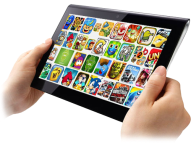
The iPad is a simple device to learn and use
Why talk about the iPad? The iPad overall represents what the ideal tablet is and it looks at why tablets became successful in a beneficial way to mankind. The statements above are essentially why tablets are so helpful, aside from how they are also portable and
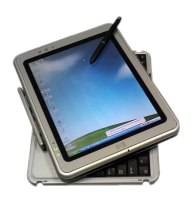
The iPad was an ingenious invention . Taking a look back at the failure of the Microsoft Tablet PC in 2002, it really was just an imitation of a computer. The way you navigate it is very similar to a computer, the only difference being the
Microsoft Tablet PC
use of a stylus (which is optional to the keyboard). In the picture below, it shows this tablet, and its similarities to computers during that time. The iPad however, was different and original in the time it came out. Namely, we have its ease of use and it isn’t as confusing to use as a tablet with a stylus. The stylus an extra tool to carry and take care of, and for the Microsoft Tablet PC, it was necessary to use the stylus with the tablet (using fingers wasn’t really supported). This ease of use is accomplished through how the iPad sets out a different layout of applications, the navigation and generally how it all works. Thus, the iPad is an important device that through its features, describe why tablets are beneficial to society.
The insides of a tablet are quite similar to a typical computer. Here is a list of the general hardware parts of a tablet: touchscreen display, front camera, light sensor, buttons, power key, volume key, USB connector, power connector, external storage unit, SIM card cover, headphone jack, speaker/s, the microphone and sometimes a stylus. Most of these parts should be quite familiar so I’ll go through the parts you might not know. The light sensor is found near the camera and detects light levels. The USB cable is for charging its battery as well as connecting to a computer. The external storage unit is for a memory card to gain extra storage.
Labelled Tablet Diagram
The sensors in a tablet are more or less the same as the ones in a phone. The proximity sensor – used for various things, namely: rejecting accidental screen touching, saving battery by reducing light levels if no-one is close by and detecting voice levels. The GPS sensor – helps navigate with the help of GPS satellites. The light sensor, is as mentioned before. Accelerometers – help with detecting the rate of change for orientation. Compass – detects direction. Finally, the gyroscope which is also another directional sensor that detects tilt about an axis. These sensors are essential to tablets in helping them process information. For the CPU of tablets, the idea is that they generally use smaller processors when compared with a computer. It uses a microprocessor, this is mainly to cut down on space and to reduce heat generation. Examples of processors includes Cortex-A series, AMD series and Intel Core series.
The tablet’s output is the same as any electronic screen device. Data is processed within the tablet which can be considered an output. This is shown on the screen, another output. Printing is another form of output, which is physical. Tablets have had the capability of printing ever since Apple’s iPad. It could also be done within a software. For example, if you were to use a calculator and entered ‘3+5=’, then the output in the end would be ‘8’. The tablet also has sound output; music, games or even online. The point is, the tablet’s output capabilities are the same as a typical computer.
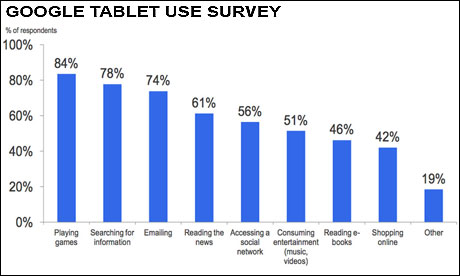
Tablets cover a variety of uses. Initially, it was designed for younger audience (specifically children), including writing with a digital pen (digital notebooks) and to play games. Now, not only is it used for these purposes but also in many other aspects of our modern world. Today, it is used by people of all ages. Some examples of its uses includes emailing, file sharing, image/video editing, video calling, portable gaming and internet browsing. However, one thing that hasn’t changed is that the tablet is portable. The tablet being portable is the main reason why people use it. Unlike the computer and phone, it is capable of doing a lot of things as technology as well as being able to move around considerably freely. The image below outlines what people usually use the tablet for. As the tablet originally targeted younger audiences, playing games being the top usage is no surprise.
In terms of society, not just in individual houses, tablets are widely becoming more popular within parts like education, healthcare and business. For education, because the tablet was designed for children, education in schools is made easier by the tablet. In the modern society, children have grown up with the presence of technology rather than colouring, drawing and writing with pencil-like tools. Therefore, the tablet is easier for children to grasp and use. In business, tablets are used because of its portability and its lightning fast recognition. Whilst the calling capability ranges from different tablet types, social media such as Skype can be used for contact in replace of the phone. In healthcare, the same reasons apply. It can also be easily moved around and its large screen allows it to be easily read. Additionally, it also light to carry around.
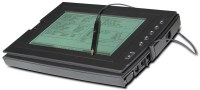
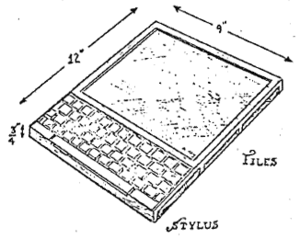
The history of the tablets only started about years ago with the invention of the Dynabook. The Dynabook was the initial concept for the tablet; this concept was designed by an American computer scientist named Alan Kay. The design was pretty much a flat computer with touchscreen capabilities with the use of a stylus. This design was meant for children because of how it was easier to use (in terms of design). During this time however, this idea was very costly and so it was never created for a while. In 1989, the GRidPad was created and then it was released to the consumer markets. It was a Dynabook without the keyboard. The stylus was attached by a string. It was very useful for designing, animating and for graphics. The twist to this was that it weighed a lot and was quite thick.
The first true tablet to emerge was in 2002, when the Windows XP tablet came out. Maybe it wasn’t as thin and light as the tablets we have today but it certainly introduced new capabilities than the previous tablets made. However, it wasn’t ‘really’ a tablet. It was more of an imitation of a computer. Eight years later in 2010 came the invention of the iPad. This set a point in history where the tablet experience people had waited for had finally released. The iPad took full advantage of its touchscreen capabilities. It was light and thin. Additionally, anyone could use it because it was easy to understand how it worked. Since the release of the iPad, tablets have been experimented with to further the tablet technology we have today and is slowly evolving.
By definition, a tablet is distinguished from other electronic devices by its touchscreen and portable capabilities when compared to a typical computer. They are used for various day to day activities whether this is at home or for business. Tablets are not massively revolutionary, but despite this, they have become an increasingly popular device especially since 2010 with the release of the iPad. Before, computers and laptops were the computing devices that were most significantly used. In this blog, I will discuss what the tablet has grown to be today!



 Easy to use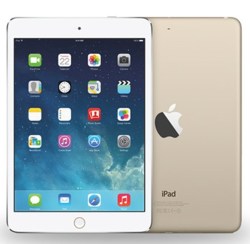
![digag]](https://robo.video.blog/wp-content/uploads/2018/10/digag.jpg?w=1100)
 The Tablet