
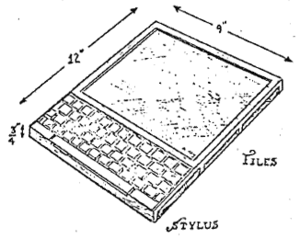
The history of the tablets only started about years ago with the invention of the Dynabook. The Dynabook was the initial concept for the tablet; this concept was designed by an American computer scientist named Alan Kay. The design was pretty much a flat computer with touchscreen capabilities with the use of a stylus. This design was meant for children because of how it was easier to use (in terms of design). During this time however, this idea was very costly and so it was never created for a while. In 1989, the GRidPad was created and then it was released to the consumer markets. It was a Dynabook without the keyboard. The stylus was attached by a string. It was very useful for designing, animating and for graphics. The twist to this was that it weighed a lot and was quite thick.
The first true tablet to emerge was in 2002, when the Windows XP tablet came out. Maybe it wasn’t as thin and light as the tablets we have today but it certainly introduced new capabilities than the previous tablets made. However, it wasn’t ‘really’ a tablet. It was more of an imitation of a computer. Eight years later in 2010 came the invention of the iPad. This set a point in history where the tablet experience people had waited for had finally released. The iPad took full advantage of its touchscreen capabilities. It was light and thin. Additionally, anyone could use it because it was easy to understand how it worked. Since the release of the iPad, tablets have been experimented with to further the tablet technology we have today and is slowly evolving.
https://www.thoughtco.com/history-of-tablet-computers-4096586

 The Tablet